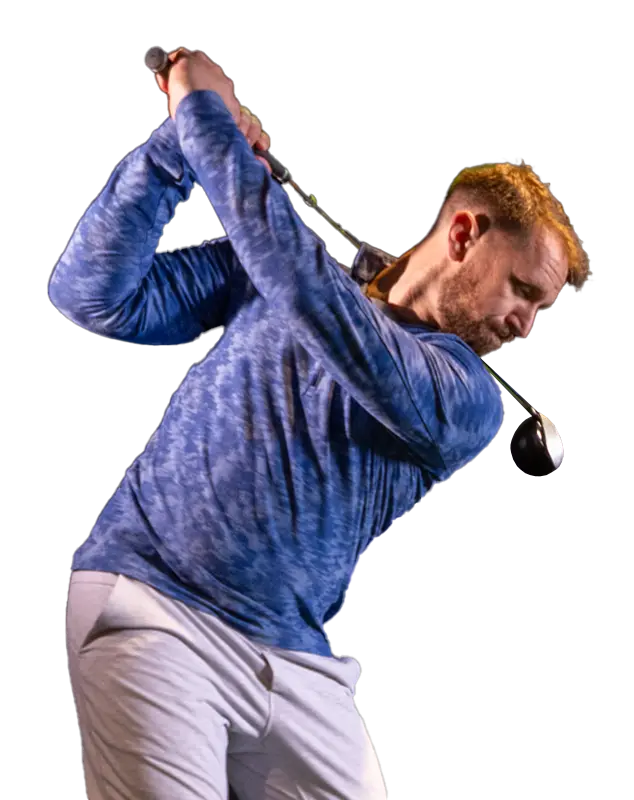
PGA Tour pros know something most amateurs overlook. Approach shots account for 40% of their scoring advantage—more than driving, more than putting.
Yet recreational golfers spend 90% of their practice time pounding drivers.
This guide covers what an approach shot is, which club to use at every distance, and the strategies that separate single-digit handicappers from everyone else.
Whether you’re trying to break 100 or scratch, better approach shots mean lower scores. Period.
What Is an Approach Shot in Golf?
An approach shot is any shot you hit with the intention of landing the ball on the putting green.
It’s your second shot on a par-4. Your third shot on a par-5. Your tee shot on a par-3.
The distance can vary wildly—anywhere from a 200-yard fairway wood to a delicate 40-yard pitch with your sand wedge. What defines an approach shot isn’t the club or the distance. It’s the target: the green.
This separates approach shots from other shot types. Your drive prioritizes distance and positioning. Chips and pitches are recovery shots played from just off the green. Putts happen once you’re already on the putting surface.
The approach shot bridges the gap between “getting there” and “finishing the hole.”
Why does this matter for your scorecard?
Greens in Regulation (GIR) is one of the strongest predictors of scoring. When you hit the green in regulation, you give yourself a birdie putt. When you miss, you’re scrambling to save par.
Better approach shots mean more birdie opportunities and fewer stressful up-and-downs.
Which Club Should You Use for Approach Shots?
Club selection is where most amateurs lose strokes. They guess. They grab whatever “feels right.” They consistently come up short.
The fix is simple: know your stock yardages.
A stock yardage is the distance a club travels when you hit it with a normal, comfortable swing in calm conditions. Not your best shot. Not your worst. Your average.
If you don’t know these numbers, you’re flying blind on every approach.
Approach Shot Club Selection by Distance
Here’s a general guide. Your personal distances may vary based on swing speed and equipment.
40-60 yards: Sand wedge or lob wedge. This requires a partial swing with high trajectory. Most golfers struggle here because it’s neither a full swing nor a chip.
60-80 yards: Gap wedge or sand wedge. A full sand wedge or three-quarter gap wedge works well. This is prime scoring distance if you practice it.
80-100 yards: Pitching wedge or gap wedge. You want a full, comfortable swing rather than a hard partial swing. Control beats power.
100-125 yards: Pitching wedge or 9-iron. This is the most common approach distance for recreational golfers. Dial in this range and watch your GIR percentage climb.
125-150 yards: 9-iron, 8-iron, or 7-iron. You’re in mid-iron territory now. Club selection depends heavily on conditions.
150-175 yards: 7-iron, 6-iron, or 5-iron. Add a club if you’re hitting into wind or to an elevated green.
175-200 yards: 5-iron, hybrid, or fairway wood. Be honest about your ability. There’s no shame in laying up short of trouble.
The key principle: Always choose the club that allows a smooth, controlled swing. A relaxed 7-iron beats a forced 8-iron every time.
Find Your Real Distances
Most golfers overestimate how far they hit each club. They remember their best shots and forget the average ones.
X-Golf’s simulator technology solves this problem. The system measures carry distance versus total distance for every club in your bag. Many golfers discover their actual distances are 10-15 yards shorter than they assumed. Learn more about how golf simulators improve your game through precise data tracking.
That single insight—knowing your real numbers—can drop strokes immediately.
How to Adjust Your Approach Shot for Course Conditions
Knowing your stock yardages is step one. Step two is adjusting for what’s happening on the course right now.
Four factors change your club selection: the lie, the wind, the elevation, and the temperature.
The Lie
Your ball’s lie affects how cleanly you can strike it—and how far it will travel.
Fairway: Standard club selection. This is your baseline.
First cut of rough: Use your normal club, but expect less spin. The ball may release more after landing.
Deep rough: Club up. Thick grass grabs the clubhead and reduces distance. Sometimes the ball “flies” with less spin and rolls out. Sometimes it comes up well short. Either way, take more club.
Fairway bunker: Expect about 80% of your normal distance. Focus on clean contact first, distance second.
Divot: Play the ball slightly back in your stance. Hit down firmly. Accept that you might lose some distance.
X-Golf’s simulator replicates these conditions with a realistic lie system. From the rough, expect 80-90% of your normal distance. From fairway bunkers, 80%. From greenside bunkers, just 50%—meaning you need to hit double the shown yardage.
The display shows your current lie percentage on screen. This trains you to make proper adjustments before you face them on a real course. See how X-Golf’s technology works to understand the full simulation experience.
Wind Adjustments
Wind changes everything. Even a moderate 10 mph breeze requires a one-club adjustment.
Into the wind: Club up. If you’d normally hit an 8-iron, take a 7-iron. Into a strong wind, you might need two extra clubs.
Downwind: Club down. Your shots will fly farther and roll more after landing.
Crosswind: Aim into the wind and let it push the ball back toward your target. A right-to-left wind means aiming right of the pin.
One mistake to avoid: don’t swing harder into the wind. A harder swing creates more spin, which makes the ball balloon and actually fly shorter. Take more club and make a smooth swing.
Elevation Changes
Elevation is the adjustment most golfers forget.
Uphill to the green: Add approximately one club for every 30 feet of elevation gain. A shot that plays 150 yards on flat ground might play like 160 yards uphill.
Downhill to the green: Subtract one club for every 30 feet of drop. The ball stays in the air longer and carries farther.
Uphill lie (ball above your feet): The ball tends to draw. Aim slightly right to compensate.
Downhill lie (ball below your feet): The ball tends to fade. Aim slightly left.
Temperature
Cold air is denser than warm air. Your ball won’t fly as far on a 45-degree morning as it will on an 85-degree afternoon.
On cold days, add half a club to a full club to your normal selection. On hot days, you might get a few extra yards of carry.
Smart Approach Shot Strategy That Lowers Scores
Most amateurs aim at the flag. Most amateurs also miss greens.
There’s a connection.
Stop Pin Hunting
Here’s data from Arccos, which tracks over 100 million golf shots. From 100-120 yards, the average proximity to the hole by handicap:
- 0-5 handicap: 49 feet
- 6-10 handicap: 55 feet
- 11-15 handicap: 62 feet
- 16-20 handicap: 71 feet
- 20+ handicap: 83 feet
For reference, PGA Tour players average just under 20 feet from 100-125 yards.
Now think about that. Even low-handicap amateurs land the ball nearly 50 feet from the hole. Firing at a tucked pin with water short and a bunker right? That’s asking for trouble.
The smart play is almost always the center of the green.
The Back-Center Strategy
Here’s a strategy that’s lowered handicaps for thousands of golfers. It’s simple.
Aim at the center of the green. Use the yardage to the back of the green for your club selection.
Why does this work?
First, amateur golfers miss short far more often than they miss long. Data shows 80-90% of missed greens are short. By using back yardage, a slight mishit still finds the putting surface.
Second, the center of the green never moves. Pin positions change. Tucked pins tempt you into risky shots. But the middle of the green is always a safe target.
Third, putting from anywhere on the green beats chipping from off it. A 40-foot putt is better than a 15-foot chip. You’ll save more strokes with this conservative approach.
As Boo Weekley famously said: “The center of the green never moves.”
Know Your Miss Pattern
Do you tend to miss left or right? Short or long?
Once you know your typical miss, you can adjust your aim. If you consistently miss approach shots right, aim at the left-center of the green. Your misses become hits.
X-Golf’s instant feedback shows your club path and impact position after every shot. Patterns become obvious quickly. You’ll see whether you’re coming from inside, outside, or over the top—and exactly why your shots curve the way they do.
When to Attack vs. Play Safe
Not every flag deserves an aggressive approach. Here’s a quick framework:
Attack when:
- The pin is in the center of the green
- There’s no significant trouble around the hole
- You have a comfortable yardage
- Missing long isn’t penalized
Play safe when:
- The pin is tucked behind a bunker or water
- You’re between clubs (take more and aim safe)
- The lie is poor
- You’re playing a hole where par is a good score
Smart course management separates good players from great ones. Sometimes the boring shot is the right shot.
5 Approach Shot Mistakes That Cost You Strokes
1. Underestimating Distance
This is the most common mistake in recreational golf. You pick a club based on your best-ever shot with that club, not your average.
Use your real carry distance. If you hit your 8-iron 145 yards once and 135 yards normally, plan for 135.
2. Ignoring the Lie
A ball sitting down in the rough won’t travel as far as a ball on a perfect fairway lie. Adjust accordingly.
Many golfers hit the same club regardless of the lie. They’re surprised when the ball comes up short from thick grass. Don’t be that golfer.
3. Forgetting About Wind
A 10 mph wind isn’t dramatic to feel. But it changes your club selection by at least one full club.
Pay attention to the trees, the flag, the clouds. Factor wind into every approach shot.
4. Always Aiming at the Flag
Pin hunting is ego golf. The center of the green is where smart golfers aim.
You’ll hit more greens, have more birdie putts, and avoid the big numbers that ruin rounds.
5. Decelerating Through Impact
Indecision breeds bad swings. When you’re unsure about club selection, you tend to slow down through impact.
Pick a club. Commit to it. Make a confident swing. A committed swing with the “wrong” club often produces better results than a tentative swing with the “right” one. For more on building a consistent swing, see our guide on how to swing a golf club at an X-Golf simulator.
How to Practice Approach Shots Effectively
Improvement doesn’t happen by accident. You need focused practice on the shots that matter most.
On the Driving Range
Most golfers hit drivers on the range. They warm up with a few wedges, then pound drivers for 45 minutes.
Flip that script.
Spend the majority of your range time on approach shots. Here’s a simple protocol:
- Pick one club (your 8-iron, for example)
- Hit 50 shots to a specific target
- Throw out your 5 best and 5 worst shots
- The remaining 40 shots show your average distance
This eliminates the outliers and gives you real data. Repeat with your most-used approach clubs: pitching wedge, 9-iron, 8-iron, 7-iron.
Proximity Benchmarks
Use these numbers to gauge your improvement. From 100-120 yards:
- Tour player: 20 feet average
- Scratch golfer: 45-50 feet
- 10-handicap: 55 feet
- 20-handicap: 70-80 feet
Don’t expect tour-level proximity. But do expect gradual improvement as you practice with purpose.
Simulator Practice Advantages
A driving range can only do so much. You can’t practice from bunkers. You can’t simulate elevated greens. You can’t get precise feedback on launch angle and spin.
X-Golf’s simulator technology fills these gaps.
The overhead sensor system tracks high-trajectory shots from 40, 50, 60+ yards. Your ball doesn’t need to hit the screen—the sensors capture everything. This means you can practice delicate pitch shots that would roll off a range.
The touchscreen interface lets you select any yardage. Want to practice 87-yard approaches? Dial it in. 143 yards to a back pin? Done.
X-Golf’s multi-sensor technology measures every metric that matters for approach shots:
- Launch angle (critical for controlling trajectory)
- Back spin (affects how quickly the ball stops)
- Side spin (shows draw or fade tendencies)
- Carry distance (how far the ball flies)
- Club impact position (where the face meets the ball)
- Smash factor (efficiency of energy transfer)
Most importantly, you can practice from realistic lies. Rough, fairway bunkers, greenside bunkers—conditions you simply can’t replicate on a flat driving range mat.
And you can play actual holes. When you face a 145-yard approach over water on Bay Hill’s 17th in the simulator, you learn to manage pressure. That translates to your home course. Check out our indoor golf simulator tips for more ways to maximize your practice sessions.
Types of Approach Shots Every Golfer Should Know
A versatile short game means having options. Here are the approach shots you should practice:
Standard Full Swing
This is your default. A smooth, controlled swing to your stock yardage.
Most approach shots should be standard full swings. If you find yourself constantly manipulating the swing, you’re probably choosing the wrong club.
Knockdown Shot
Use this into the wind or when you need a lower trajectory.
Play the ball slightly back in your stance. Keep your hands ahead of the clubhead at impact. Finish with an abbreviated follow-through.
The ball flies lower, bores through the wind, and checks up on the green.
High Soft Shot
Use this when you need to clear an obstacle and stop quickly.
Open the clubface slightly. Make a full swing with high hands. The ball launches higher, lands softer, and doesn’t release as much.
This is valuable when short-siding yourself to a tight pin.
Punch Shot
Use this to stay under tree branches or escape from trouble.
Ball back, hands forward, three-quarter swing. The ball stays low and runs out after landing.
Bump-and-Run
Use this when conditions are firm or when there’s no trouble between you and the green.
Take a less-lofted club (7-iron or 8-iron). Make a putting-style stroke. Let the ball land short and roll onto the green.
This shot reduces variables. It’s often the highest-percentage play when the pin is accessible.
Practice Approach Shots on World-Class Courses
The best practice simulates real situations.
X-Golf’s simulator library includes more than 50 courses—from Pebble Beach to St Andrews Old Course. You can practice approach shots on the same holes the pros play.
This isn’t just about entertainment. It’s about decision-making.
When you face a 145-yard approach over water at Bay Hill’s 17th, you learn to manage pressure. When you navigate the undulating greens at Spyglass, you understand how slope affects where to land the ball.
Playing full rounds in the simulator builds the course management skills that translate to your home course. Want to test your skills against other golfers? Join one of our indoor golf leagues for weekly competition.
Start Hitting Better Approach Shots Today
Better approach shots start with three commitments.
Know your distances. Get real data on how far you actually hit each club. Not your best shots—your average.
Adjust for conditions. Lie, wind, elevation, temperature. Check all four before every approach.
Play smart strategy. Aim at the center of the green. Use back yardage. Stop pin hunting.
These changes don’t require a swing overhaul. They require better decisions.
And when you combine smart decisions with focused practice, your handicap drops.
X-Golf Rockwall’s simulator technology gives you the feedback and realistic practice environment to accelerate that improvement. You’ll see your launch angles, spin rates, and carry distances after every shot. You’ll practice from lies you can’t replicate on a range. You’ll play world-famous courses that challenge your course management.
Book a bay at X-Golf Rockwall and start hitting more greens.
Frequently Asked Questions
What is an approach shot in golf?
An approach shot is any shot intended to land on the putting green. It’s typically your second shot on a par-4, third shot on a par-5, or tee shot on a par-3. The distance can range from 40 yards to over 200 yards depending on the hole.
What club should I use for a 100-yard approach shot?
Most golfers use a pitching wedge or gap wedge for 100-yard approaches. The key is knowing your personal stock yardage for each club. If your pitching wedge carries 115 yards and your gap wedge carries 95 yards, the gap wedge might require too hard a swing. Take the pitching wedge and make a controlled swing.
Why do I always come up short on approach shots?
Two reasons. First, most golfers overestimate how far they hit each club. They remember their best shots and forget the average ones. Second, golfers tend to aim at the flag rather than the center of the green. Using the yardage to the back of the green for club selection helps ensure you reach the putting surface.
How can I practice approach shots without a course?
Driving ranges help, but you’re limited to flat lies and estimated distances. Golf simulators like X-Golf offer precise yardage selection, realistic lie conditions (rough, bunkers), and detailed feedback on launch angle, spin, and carry distance. This lets you practice specific situations you’d face on the course.
What’s the difference between an approach shot and a chip shot?
An approach shot is played from farther away with the intention of reaching the green in the air. A chip shot is a short shot played from just off the green, usually with minimal air time and more roll. Approach shots use full or three-quarter swings. Chips use shorter, more controlled motions. For more on short game around the green, see our guide on how putting works in a golf simulator.
Ready to transform your approach game? X-Golf Rockwall combines proprietary sensor technology with world-class course graphics for the most realistic practice available. Find us on Ridge Road and start hitting more greens.